Skillcept Online
Key takeaways
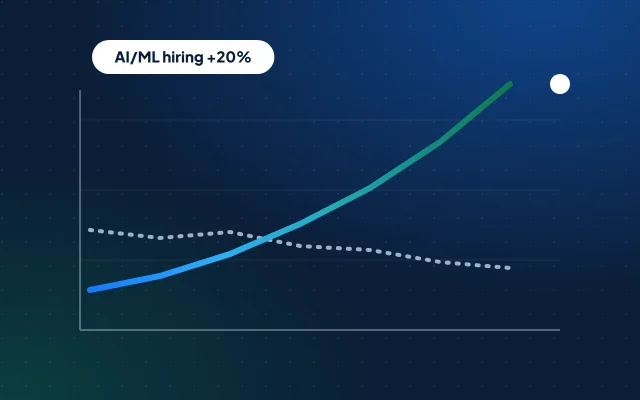
- AI/ML hiring on Naukri rose 20% year on year in September 2026, while white-collar hiring overall rose 2% and fresher hiring 1%.1
- Generic analytics work is softening: Indeed’s data and analytics job postings in India fell 14% in the three months to July 2026.2
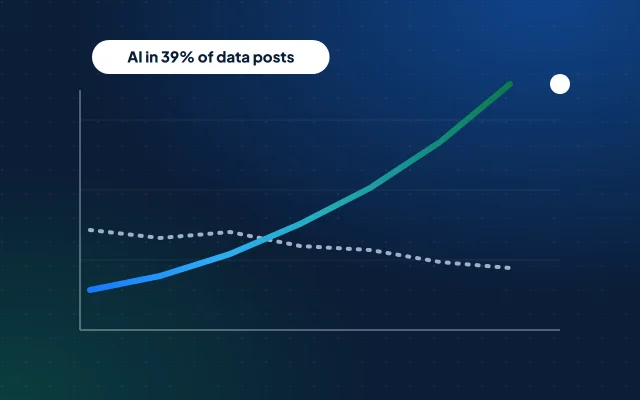
- AI is now part of data and analytics work: 39% of data and analytics postings on Indeed India mentioned AI in September 2025.3
- Competition is real, and so is the shortage: applicants per open role in India have more than doubled since early 2022, yet about 74% of recruiters told LinkedIn qualified talent got harder to find.4
The short answer
No: data science in India isn’t saturated in 2026, but its entry level is crowded, and demand has moved. Hiring for AI and machine learning roles keeps growing month after month, while overall fresher hiring has slowed. Naukri’s monthly JobSpeak reports show the split.
| Period | All white-collar hiring | Fresher hiring | AI/ML hiring |
|---|---|---|---|
| September 2026 | +2% | +1% | +20% |
| August 2026 | +14% | +15% | +31% |
| June 2026 | +6% | +8% | +25% |
| FY26April 2025 to March 2026 | +8% | Not given for the year+16% in March 2026, 0–3 years | +45% |
Change on a year earlier. Sources: Naukri JobSpeak for September,1 August5 and June 2026,6 and for March 2026 and the full year.7 The figures swing from month to month, so always check which month a number is for.
Two things are true at once. Landing a first data science job is hard, because many people apply for the same small set of entry roles with the same skills. And employers are short of people who can work with data and with AI. Which side you land on depends far more on your skills than on the market.
What’s crowded
The crowded part is the generic, entry-level end: work that AI can increasingly do on its own, and roles where many applicants bring the same certificate and the same project.
| Signal | What the data shows | Source |
|---|---|---|
| Data and analytics postings | −14% in the three months to July 2026, while all Indian postings were 8.3% higher than a year earlier | Indeed |
| Fresher hiring | +1% in September 2026 | Naukri |
| IT and software services hiring | −4% in September 2026 | Naukri |
| The most AI-exposed office jobs | GenAI cut monthly job listings by about 20% for the most exposed, least complementary jobs, such as call-centre agents and software developers | World Bank |
| The entry layer in tech firmsAI-support roles keep AI systems running | None of the 16 premium tech roles TeamLease Digital identified was an AI-support role: the entry layer, it says, is “compressing rather than being repriced” | TeamLease Digital |
Sources: Indeed,2 Naukri,1 the World Bank8 and TeamLease Digital.9
Look at what these have in common. The World Bank found the largest slowdowns among middle-skilled and entry-level workers, and also that listings did not fall for exposed jobs where AI complements people.8 Research from the United States points the same way: Stanford’s Digital Economy Lab found employment of 22–25-year-olds in AI-exposed jobs 19% below where it would be had it kept pace with less-exposed peers, with the declines concentrated where AI substitutes for people; where it complements them, employment was flat or rising.10
That US figure doesn’t carry over to India number for number, but the lesson does. What’s under pressure is work AI can do alone, such as rebuilding the same report every week. What holds up is work where a person uses AI to do more.
What’s still growing
Roles that build with AI, or use it on top of strong data skills, are growing fastest, at every level of experience, freshers included.
| Signal | What the data shows | Source |
|---|---|---|
| AI/ML hiring | +20% in September 2026; +19% for freshers; +11% inside IT, even as IT hiring fell 4% | Naukri |
| AI-linked roles posted | 2.9 lakh+ in 2025, projected to grow 32% to nearly 3.8 lakh in 2026 | foundit |
| AI jobs open to 0–3 years’ experience | 18% of AI jobs in 2025 | foundit |
| India’s fastest-growing roles to 2030 | Big Data Specialists, AI and Machine Learning Specialists, Security Management Specialists | World Economic Forum |
| AI in data and analytics jobs | 39% of data and analytics postings mentioned AI in September 2025, more than any other occupation | Indeed |
| Supply of AI skills | A GenAI talent gap of about 53%; only about 16% of IT professionals hold AI skills | TeamLease Digital |
Sources: Naukri,1 foundit,11 the World Economic Forum,12 Indeed3 and TeamLease Digital.9
So here is the honest synthesis: demand is moving from generic analyst roles to data science and analytics roles that need AI skills. The analyst who only rebuilds the monthly dashboard faces more competition every year. The analyst who can also automate it in Python, test a model or build an AI assistant on company data is still hard to find. Employers say as much: in hiring for AI skills, 58% of employers surveyed by NASSCOM and Indeed cite low applicant volume as a key challenge, and 50% a skills mismatch.13
What “5,000 applicants” means for you
A huge applicant count tells you how many people clicked Apply, not how many can do the job. It’s a reason to apply differently, not a reason to give up.
The crowding is real. LinkedIn found the number of applicants per open role in India has more than doubled since early 2022, and 84% of the professionals it surveyed felt unprepared to find a new job.4 First jobs are hard across the economy, not only in data: unemployment among urban youth aged 15–29 was 13.6% in 2025, and 9.9% among all youth.14
But in the same research, about 74% of Indian recruiters said qualified talent had become harder to find over the past year.4 The India Skills Report 2026 put employability at 56.35%, from tests of more than 100,000 candidates.15 And employers still plan to hire: 75% of 1,097 surveyed by TeamLease EdTech intend to hire freshers between July and December 2026, though intent in IT fell from 81% to 76%.16 A crowded pool of applicants and a shortage of qualified ones can both be true. Your job is to be in the second group, and to make that obvious at a glance.
How to stand out from the pile
- Match the post, not a template. Put the skills and tools the job post names, in its words, in the top half of your resume. Screening software and busy recruiters both look for them.
- Show proof for every skill. One project per skill that matters, on GitHub, with a README: the question, the data, what you found. Employers expect it: TeamLease EdTech found employers, particularly in IT and consulting, increasingly want AI fluency and hands-on project experience from freshers.16
- Apply where the queue is shorter. Roles that combine SQL and Python with an AI tool; banks and insurers, whose AI hiring grew 41% in 2025;11 and cities beyond the big metros: in June 2026, hiring grew 21% in Bhubaneswar, 15% in Indore and 10% in Coimbatore.6
- Send fewer, better applications. Twenty applications tailored to roles you fit beat two hundred one-click ones. Track every reply, and change your resume when one kind of role never answers.
- Use people, not only portals. A referral, or a short message to someone on the team, skips the pile. Ask a specific question about their work rather than asking for a job.
Skills that get you hired
SQL and Python on real data, the statistics and machine learning to reason about it, and enough AI to use it at work and check what it gives you. Then proof of each.
| Skill | Why it counts | What the data shows |
|---|---|---|
| SQL and data handling | Every data role starts with getting and cleaning data | SQL and data-engineering skills were sought in more than half of AI job posts in 2025 (foundit)11 |
| Python | The language of analysis, machine learning and AI tools | Python featured in nearly three-quarters of AI job posts in 2025 (foundit)11 |
| Statistics and machine learning | To tell whether a result is real, and to build models that predict | Machine learning roles are expected to keep a 34% share of AI jobs in 2026 (foundit)11 |
| GenAI and LLMs | Assistants, retrieval and agents built on company data | Demand for GenAI and LLM skills is projected to rise 58% in 2026 (foundit)11 |
| AI at work | Using AI tools in everyday work, and checking their output | AI skills appear in 15.4% of tech job descriptions, up from 0.9% in 2020 (Naukri)17 |
| Proof | Projects and certifications you can demonstrate | 40% of employers prefer demonstrable AI skills or certifications over degrees (NASSCOM–Indeed)13 |
Pay follows the same skills. Naukri found median salaries 53% higher for AI-skilled roles, with premiums of up to 56% for freshers.18 Our AI/ML Engineer salary guide has the figures by role and source, and Generative AI jobs in India covers the GenAI roles and the tools they ask for.
What to do next, by background
Aim first for the role you can realistically win from where you are today, then add AI on top. A sensible first target for each starting point:
| You are | Aim first for | Add this | Skip this |
|---|---|---|---|
| A fresher, any degree | Data Analyst or Junior Data Scientist | SQL, Python and one project that uses AI on Indian data | Certificates without projects |
| Switching from a non-IT jobCommerce, sales, BPO, core engineering, pharma | An analyst role in the field you know | SQL and Power BI on data from your own field | Starting over as if your experience didn’t count |
| Working in ITTesting, support, development | Data Engineer, ML Engineer or AI Engineer | Python, machine learning, then LLM applications | Waiting in roles where hiring is flat |
| Back after a career break | Data Analyst | A current project that shows today’s tools, AI included | Long explanations of the gap |
| Already an analyst | Data Scientist, or an analyst who builds with AI | Machine learning and GenAI | More dashboards of the same kind |
For people in IT, the pay outlook makes the case: TeamLease Digital projects pay growth in FY27–28 of 16.2% for GenAI developers, against 6.6% for technical support engineers.9 For a step-by-step path into the first role, see our Data Analyst roadmap.
Our three plans follow the same targets: Go for Data Analyst roles, Plus for Data Scientist roles and Infinity for AI/ML Engineer roles, each with its own minimum salary assured. Compare the plans.
This week
- Open 20 current job posts for the role you want. List every skill that appears in more than half of them.
- Mark each one: can do, can do with help, can’t do yet. The last column is your plan.
- Pick one dataset on data.gov.in, India’s open government data, and one question about it. Answer it with SQL and Python.
- Add one AI step, such as a summary written by an LLM, and check every number it gives you against your own.
Questions
Is data science saturated in India in 2026?
Not overall. Generic entry-level analyst roles are crowded, and Indeed’s data and analytics postings fell 14% in the three months to July 2026. But AI/ML hiring on Naukri rose 20% year on year in September 2026: demand is moving to data science and analytics roles that need AI skills.
Is data science still worth it for freshers?
Yes, with the right skills. Overall fresher hiring on Naukri rose just 1% in September 2026, but fresher hiring in AI/ML rose 19%, and foundit found 18% of AI jobs in 2025 open to people with 0–3 years’ experience.
Will AI replace data scientists and analysts?
AI is replacing tasks more than whole jobs. The World Bank (October 2025) found job listings fell for the most AI-exposed jobs where AI complements people least, but not for exposed jobs where it complements them well, and 39% of data postings on Indeed India now ask for AI as part of the job.
Why does every entry-level data science job get thousands of applicants?
Applying takes one click: LinkedIn found applicants per open role in India have more than doubled since early 2022. Yet about 74% of recruiters say qualified people got harder to find, so a tailored resume with proof of each skill still stands out.
Can I get into data science from a non-tech background in 2026?
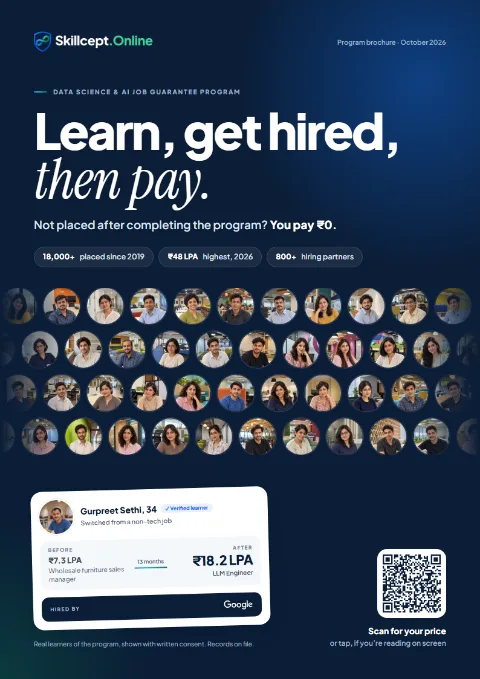
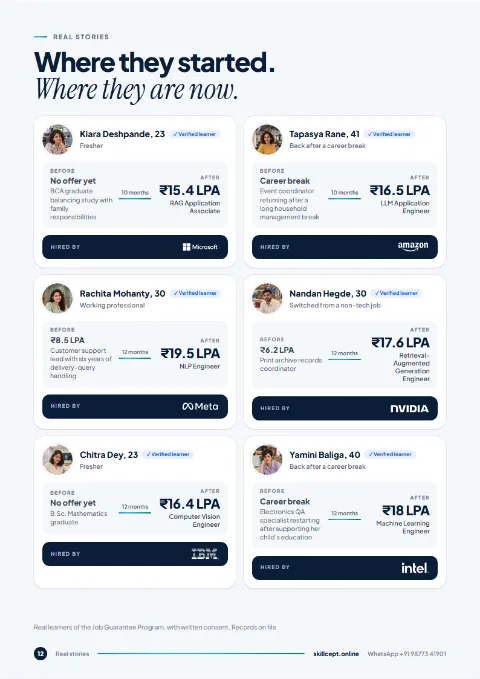
Yes. Of the learners we placed, 46% came from a non-tech degree and 24% were freshers, with no work experience. Records on file. And 30% of employers in India find skills-based hiring, which drops degree requirements, effective, against 19% worldwide (World Economic Forum, January 2025).
Which is less crowded: data analyst, data scientist or AI engineer?
The roles closer to AI. LinkedIn ranked AI Engineer among India’s top three Jobs on the Rise for 2026, and AI/ML hiring is growing faster than hiring overall. Generic analyst roles are the most crowded, so analysts who add Python, machine learning and AI tools stand out.
Sources
- Naukri, JobSpeak, September 2026, 6 Oct 2026.
- Indeed, July 2026 job postings data, reported in CXOToday, 26 Aug 2026.
- Indeed Hiring Lab, September 2025 labour market update, 25 Oct 2025.
- LinkedIn research and Jobs on the Rise 2026, reported by PTI in Storyboard18, 8 Jan 2026.
- Naukri, JobSpeak, August 2026, 7 Sep 2026.
- Naukri, JobSpeak, June 2026, 3 Jul 2026.
- Naukri, JobSpeak, March 2026 and FY26, 6 Apr 2026.
- World Bank, South Asia Development Update, October 2025.
- TeamLease Digital, Digital Skills & Salary Primer FY2026–27, reported in CXOToday, 29 Sep 2026.
- Stanford Digital Economy Lab, Canaries in the Coal Mine? (US payroll data, revised 2026), read 17 Oct 2026.
- foundit Insights Tracker, reported in Storyboard18, 13 Jan 2026.
- World Economic Forum, Future of Jobs Report 2025, 7 Jan 2025.
- NASSCOM and Indeed, India’s AI Talent Inflection Point, May 2026.
- Ministry of Statistics and Programme Implementation, Periodic Labour Force Survey, Annual Report 2025 (January–December 2025), March 2026.
- India Skills Report 2026, reported in Careers360, 11 Nov 2025.
- TeamLease EdTech, Career Outlook Report HY2 2026, reported in People Matters, 11 Aug 2026.
- Naukri, World AI Day Report 2026, reported by IANS in Telangana Today, 17 Jul 2026.
- Naukri, AI Jobs Report, 16 Jul 2025.