Skillcept Online
Key takeaways
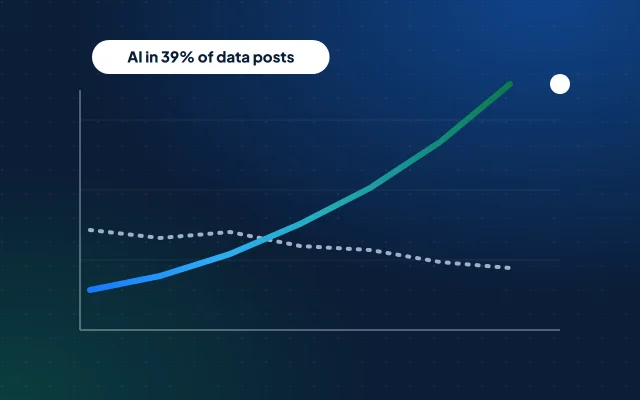
- AI is now part of the job: 39% of data and analytics job postings in India mentioned AI in September 2025, more than any other occupation (Indeed).1
- Where AI substitutes for people, listings fall; where it complements them, they don’t: GenAI cut monthly listings by about 20% for the most exposed, least complementary office jobs, while listings for exposed jobs with high complementarity did not decline (World Bank, October 2025).2
- Employers in India expect Data Analysts and Scientists to grow 54% by 2030, against 41% globally, while Data Entry Clerks are among the fastest-declining jobs worldwide (World Economic Forum, January 2025).3
- The entry level feels it first: in US payroll data, employment of 22–25-year-olds in AI-exposed jobs is 19% below where it would be had it kept pace with less-exposed peers, yet the researchers found no evidence of economy-wide job loss (Stanford, August 2026).4
- AI skills pay: AI-focused roles in South Asia carry a 28% wage premium, against 12% for general digital skills (World Bank).2
The short answer
Will AI replace data analysts? Not as a job, on the evidence so far, but it is replacing parts of the work, and it is changing who gets hired. A data analyst is the person who turns a company’s data into answers: what happened, where, why, and what to do about it. AI can now draft much of the “what”; the “why” and the “what to do” still need a person who knows the business and can check the numbers.
The research points the same way across countries. Hiring falls where AI can do a job alone, and holds up where AI makes a person more productive. Analysis that feeds a decision sits on the second side; copy-paste reporting sits on the first.
So the useful question isn’t whether AI will replace analysts. It’s which analyst you’ll be: the one rebuilding last month’s report by hand, or the one who uses AI to build it in an hour, checks it, and spends the rest of the day on the question behind it.
What the evidence says
AI is spreading through analyst jobs fast, and the damage so far is concentrated where AI can work without a person. Here is the evidence, with where each study looked.
| Finding | What it shows | Where |
|---|---|---|
| AI in analyst job posts | 39% of data and analytics postings mentioned AI, the most of any occupation; 11.7% of all postings did, up from 8.2% a year earlier | India, Indeed, September 20251 |
| AI in job titles | 349 job titles carried meaningful AI mentions in the March 2026 quarter, double a year earlier; 42% of them were outside tech | India, Indeed5 |
| Generic tech postings | Data and analytics postings fell 14% in the three months to July 2026, software development 18% | India, Indeed5 |
| Substitute or complement | GenAI cut listings by about 20% for the most exposed, least complementary white-collar jobs, such as call-centre agents; listings for exposed jobs with high complementarity did not decline | South Asia, World Bank2 |
| Employers redesigning roles | 86% of employers have seen AI change job roles, and 35% a significant redefinition | India, NASSCOM–Indeed6 |
| Young workers | Employment of 22–25-year-olds in AI-exposed jobs is 19% below the path of less-exposed peers, with the declines where AI substitutes; flat or rising where it complements workers | United States, Stanford4 |
Two more findings matter for analysts. In the World Bank’s analysis, highly cognitive jobs such as finance professionals and mathematicians look the most exposed to AI at first, but once you account for how AI complements them they fall well down the list, replaced by routine administrative jobs such as payroll clerks and proofreaders.2 And India ranks highest in South Asia in the share of AI-exposed jobs that are complementary.2
The Stanford study uses US payroll data, and its numbers don’t carry over to India one for one. We include it because its pattern, pressure on entry-level hiring where AI substitutes and none where it complements, matches what the World Bank found in South Asia.
What AI already does in an analyst’s day
AI already drafts most of the mechanical steps. What it can’t do is know whether its draft is right for your business.
| Task | What AI does today | What still needs you |
|---|---|---|
| Writing SQL | Drafts a query from a plain-English question | Knowing which table holds the truth, and whether a join double-counts |
| Cleaning data | Suggests steps and writes the pandas code | Deciding what is an error and what is a real outlier |
| Building reports | In Power BI, Copilot can create report pages, write DAX queries and summarise a report | A clean data model: Microsoft notes that without one, Copilot can misread the data and give generic or wrong answers |
| Explaining results | Drafts a summary of a chart or a table | Checking every number, and saying what it means for the decision |
| Routine reporting | Refreshes and narrates the weekly pack | Spotting the week the number is wrong, and why |
| Text data | Sorts feedback, tickets and reviews into themes at scale | Defining the themes, and checking a sample by hand |
Copilot’s capabilities and caution: Microsoft Learn, Copilot for Power BI overview, read 22 Oct 2026.9
Analysts are already among the heaviest users. Naukri’s World AI Day Report 2026 named data science and analytics among the functions where professionals rely most on AI, and found AI skills in 15.4% of tech job descriptions, up from 0.9% in 2020.7
What doesn’t change
The judgment. AI makes the mechanical part faster; it doesn’t decide what the business should measure or carry the responsibility for a wrong number.
- The question. Turning “sales feel slow in the south” into something data can answer is still the analyst’s first job.
- Definitions. What counts as an active customer, a churned user or a delivered order differs from company to company, and AI can’t guess it.
- Data quality. Knowing that one region uploads late, or that a field changed meaning in March, comes from working with the data.
- Cause, not just correlation. Telling a real effect from a coincidence, and designing the test that proves it, needs statistics and judgment.
- Checking the machine. Knowing when not to rely on AI is a skill you can only use if you can do the work yourself.
- Privacy. Personal data needs care under India’s Digital Personal Data Protection Act, 2023: never paste customers’ details into a public AI tool.
- Owning the number. When a figure goes to a manager, a person signs it off. That person is the analyst.
Experience helps here. The World Bank found that experienced, highly educated workers have the greatest scope for productivity gains from AI, and that young, moderately educated workers are the most vulnerable to displacement.2 For a newcomer, that means building the judgment part early, on projects, not only the tool skills.
Which analyst work is most exposed
Work that only moves data from one place to another is the most exposed; work that changes a decision is the least.
| More exposed | Less exposed |
|---|---|
| Rebuilding the same report every week | Analysis behind a decision a manager has to make |
| Data entry and copy-paste MIS | Designing metrics, experiments and A/B tests |
| Charts with no question behind them | Domain analytics in banking, healthcare or supply chain |
| One-off data pulls anyone can now ask a chatbot for | The data models and pipelines AI tools run on |
| Formatting and refreshing dashboards | Analytics that builds AI in: forecasts, text classification, assistants |
Our reading of the World Bank and World Economic Forum findings in this guide, not a measured list.
The World Economic Forum’s global survey shows the same split at the scale of whole jobs. Employers expect Data Entry Clerks to be among the fastest-declining jobs to 2030, while Data Analysts and Scientists are among the 15 fastest-growing, in percentage terms.3 Both work with data. One types it in; the other decides what it means.
Is data analytics still a good career?
Yes, if you pair the analyst core with AI skills. Demand is moving towards analysts who use AI, and away from those who only report, so the role’s future depends on which kind you train to be.
| Signal | What the data shows | Source |
|---|---|---|
| Expected growth to 2030 | Data Analysts and Scientists +54% in India, against 41% globally; Business Intelligence Analysts +17% | World Economic Forum |
| Pay for AI skills | AI-focused roles carry a 28% premium; 5.8% of India’s white-collar listings required AI in 2025 | World Bank |
| Shortage of AI skills | 58% of employers cite low applicant volume as a key challenge in finding AI skills; 40% prefer demonstrable AI skills or certifications to degrees | NASSCOM–Indeed |
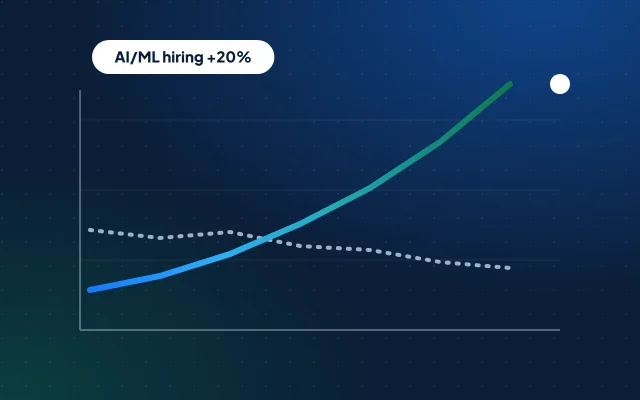
| Hiring now | AI/ML hiring +20% and fresher AI/ML hiring +19% in September 2026, while fresher hiring overall rose 1% | Naukri |
| Pay for analysts | ₹5.2–5.7 lakh a year with 1–3 years’ experience, ₹7.2–7.9 lakh with 3–6 years | AmbitionBox |
Sources: the World Economic Forum, India profile, January 2025;3 the World Bank, October 2025;2 NASSCOM–Indeed, May 2026;6 Naukri JobSpeak, September 2026;8 AmbitionBox, as of 19 Oct 2026.10
If you’re anxious about it, you’re not alone: in the same NASSCOM–Indeed research, 42% of employees said they feel anxious about AI disrupting their jobs, and 73% were learning AI through self-driven channels.6 The way through is the same for everyone: learn the skills the market is short of. For the full hiring picture, read is data science saturated in 2026?
Become the analyst who uses AI
Learn the fundamentals well enough to check AI, then use AI every day to go faster. In order:
- Learn SQL and Python properly. You can’t check a query you can’t read, and interviews still test both by hand.
- Use an AI assistant daily, with context. Give it your table structure and the business question, not just “write a query”.
- Verify every number. Reconcile AI’s answer with a quick count of your own or a second method, every time.
- Learn the AI inside your tools. Microsoft’s Copilot for Power BI overview shows what it does; it needs a paid Fabric or Premium capacity, so you’ll often meet it at work. Practise the same habits with any assistant on public data.
- Add one AI step to every project, such as sorting reviews into themes or a forecast, and measure how often it’s right.
- Learn how LLMs work, with the free Hugging Face LLM course: tokens, embeddings and retrieval.
On our program, the third week of Module 7 covers exactly this: AI coding assistants and checking what they write, AI inside Excel and Power BI, no-code automation, and responsible AI under India’s DPDP Act. See it on the curriculum. For the path to a first analyst job, start with our Data Analyst roadmap.
This week
- Take one analysis you’ve already done. Ask an AI assistant to redo it from the raw data, then compare every number and note where it went wrong.
- Open 20 analyst job posts and count how many name an AI tool. List the tools.
- Pick one dataset on data.gov.in, answer one question with SQL, and add one AI step you can check.
Questions
Will AI replace data analysts?
Not on current evidence. AI is taking over tasks such as first-draft SQL, charts and summaries, and 39% of data and analytics postings in India now mention AI (Indeed, September 2025). The World Bank found listings fell for exposed jobs where AI substitutes for people, not where it complements them.
Is data analyst a good career with AI in 2026?
Yes, if you pair the analyst core with AI skills. Employers in India expect Data Analysts and Scientists to grow 54% by 2030 (World Economic Forum, January 2025), and AI-focused roles in South Asia carry a 28% wage premium (World Bank, October 2025).
Which data analyst tasks can AI do today?
Drafting SQL and Python, cleaning steps, charts, report pages and written summaries; Copilot in Power BI can create report pages, write DAX queries and summarise reports. Microsoft notes it can misread data that isn’t well prepared, so an analyst still defines the question and checks every number.
Should I still learn SQL and Excel if AI can write queries?
Yes. You can’t check a query you can’t read, and analyst interviews still test SQL and Excel by hand. Learn the fundamentals first, then use AI to go faster.
Will AI reduce entry-level data analyst jobs?
It is putting pressure on them. The World Bank found the largest slowdowns in South Asia among entry-level and middle-skilled workers, and US payroll data show employment of 22–25-year-olds in AI-exposed jobs 19% below where it would be had it kept pace with less-exposed peers (Stanford, August 2026). Entry-level candidates with AI skills and projects stand out.
What should a data analyst learn to stay relevant?
SQL and Python deep enough to verify AI’s output, one BI tool such as Power BI, statistics, and practical AI: prompting with your data’s context, AI in Excel and Power BI, and the basics of LLMs and retrieval.
Sources
- Indeed Hiring Lab, September 2025 labour market update, 25 Oct 2025, read 22 Oct 2026.
- World Bank, South Asia Development Update, October 2025, chapter 2, read 22 Oct 2026.
- World Economic Forum, The Future of Jobs Report 2025, the global job lists and the India economy profile, 7 Jan 2025, read 22 Oct 2026.
- Stanford Digital Economy Lab, Canaries in the Coal Mine? (US payroll data, revised 12 Aug 2026), read 22 Oct 2026.
- Indeed, July 2026 job postings data, reported in CXOToday, 26 Aug 2026, read 22 Oct 2026.
- NASSCOM and Indeed, India’s AI Talent Inflection Point, May 2026, read 22 Oct 2026.
- Naukri, World AI Day Report 2026, reported by IANS in Telangana Today, 17 Jul 2026, read 22 Oct 2026.
- Naukri, JobSpeak, September 2026, 6 Oct 2026, read 22 Oct 2026.
- Microsoft Learn, Copilot for Power BI overview, updated Aug 2026, read 22 Oct 2026.
- AmbitionBox, Data Analyst salary in India, as of 19 Oct 2026, read 22 Oct 2026.